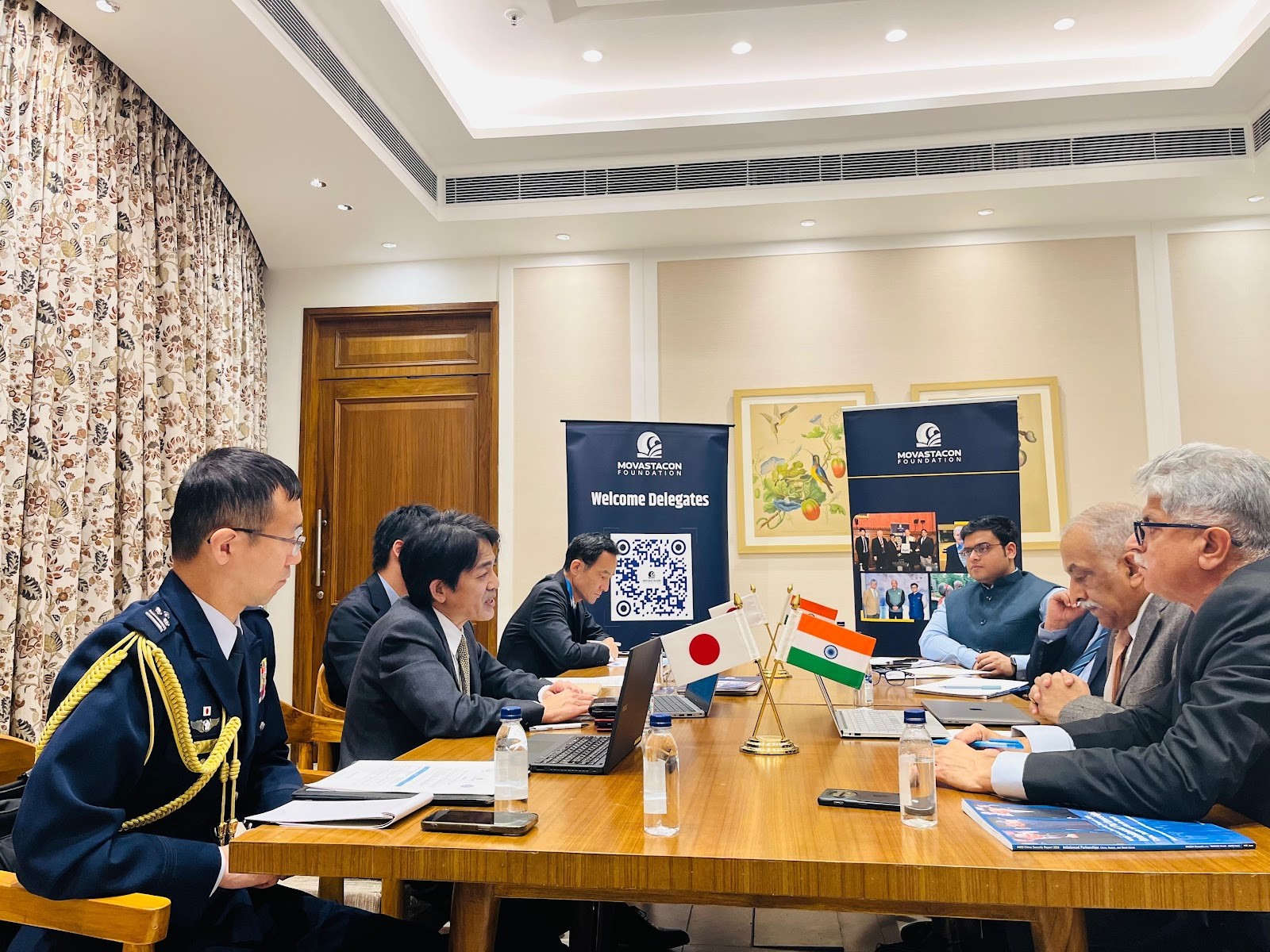
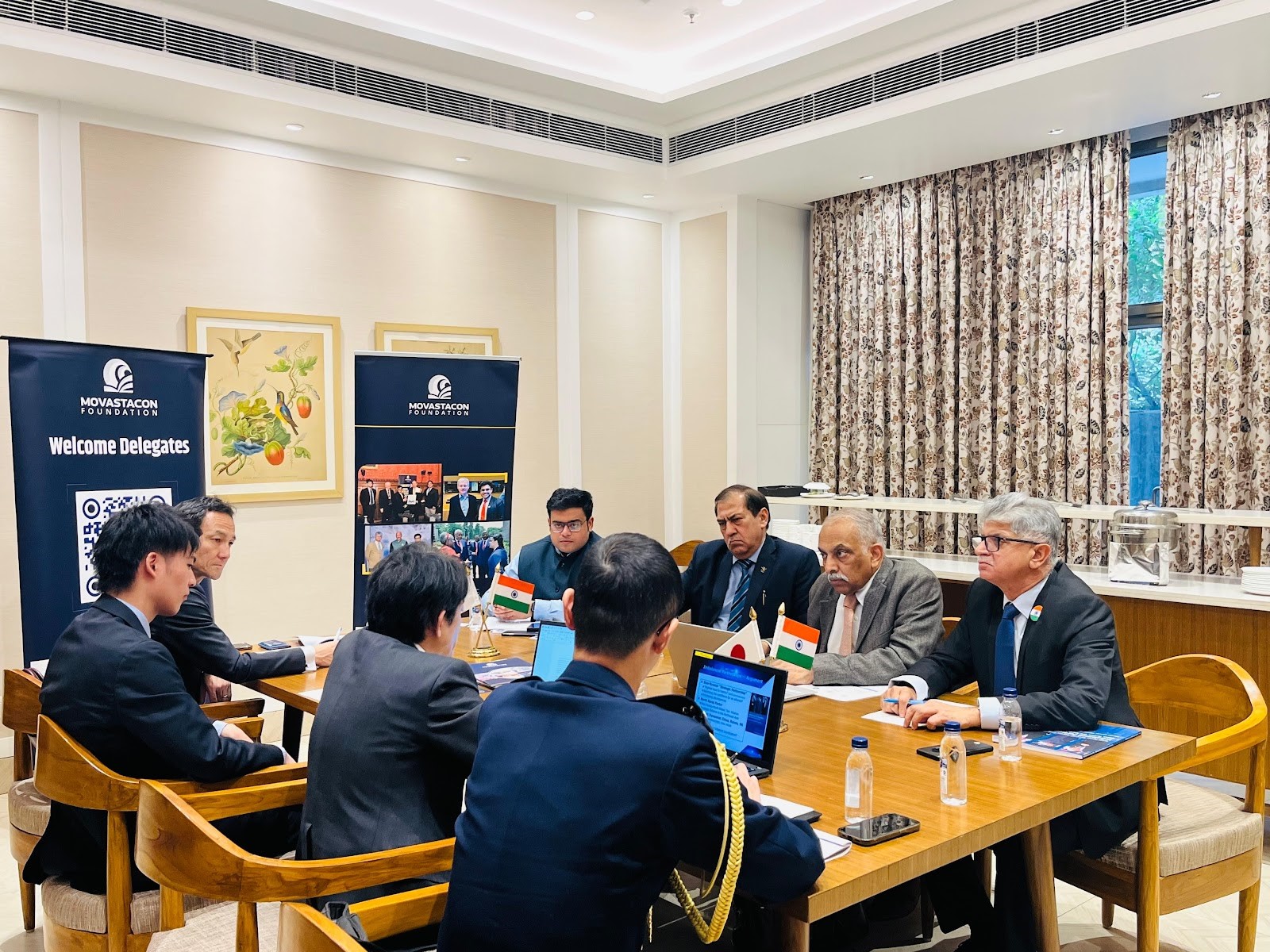
The India–Japan Strategic Exchange Session was convened on 8 December 2025, from 3:30 PM to 5:30 PM, at Committee Room II, IIC Annex, New Delhi. The high-level dialogue was jointly organised by the Centre for Defence Analysis and Homeland Security Research (CDAHSR), a unit of the Movastacon Foundation, in collaboration with the Embassy of Japan in India and the National Institute of Defense Studies (NIDS), Japan.
India–Japan Strategic Exchange Session
Conceived as a focused and closed-door strategic engagement, the session aimed to assess evolving regional security dynamics, review the trajectory of India–Japan defence and strategic cooperation, and explore opportunities for deeper institutional collaboration in the Indo-Pacific. The dialogue brought together diplomats, senior defence professionals, strategic scholars, and researchers, enabling candid and substantive discussion in a trusted and professional setting.
Opening and Context Setting
The programme commenced with opening remarks by Mr. Mohit Srivastava, Founder-President of the Movastacon Foundation. In his address, Mr. Srivastava welcomed senior officials from the Embassy of Japan, the delegation and scholars from NIDS Japan, retired senior officers of the Indian Armed Forces, and other invited participants. He outlined the objectives of the session, emphasising the importance of practical and outcome-oriented dialogue at a time of rapid geopolitical change in the Indo-Pacific.
Pacific. The discussion addressed maritime security challenges, the importance of multilateral and minilateral frameworks, supply-chain resilience, and the evolving nature of strategic partnerships in the region. Senior officials from the Embassy of Japan, including Mr. ABE Noriaki, Political Minister, Colonel Yasumura, Air Attaché, and Mr. Shimomura, Second Secretary, actively participated in the discussions. Their presence strengthened institutional engagement and ensured that diplomatic perspectives were well integrated into the strategic dialogue.
Defence Strategy and Industrial Cooperation
A key segment of the programme focused on defence strategy and industrial collaboration. Maj Gen Sanjay Soi (Retd.), Executive Director of CDAHSR, addressed the gathering and provided an operational and defence-industrial perspective on India–Japan cooperation. He reflected on the long-standing cultural and philosophical linkages between the two countries, their shared democratic values, and their common commitment to a multipolar world order.
Maj Gen Soi highlighted maritime security as a central pillar of the India–Japan strategic partnership, noting Japan’s dependence on Indian Ocean sea lanes and India’s growing role as a net security provider in the region. He emphasised the importance of joint naval exercises, maritime domain awareness, anti-submarine warfare cooperation.
He also underlined the expanding scope for defence-industrial collaboration, combining Japan’s technological strengths with India’s manufacturing capabilities under the Make in India framework. Areas such as unmanned systems, sensors, secure communications, and naval platforms were identified as promising avenues for co-development and co-production, with potential benefits for supply-chain resilience and strategic autonomy.
Key Takeaways
He noted that the exchange was designed not merely as an academic discussion but as a platform to identify areas for sustained institutional engagement between India and Japan, particularly in defence research, strategic studies, and policy collaboration.
Strategic Perspectives and Defence Discourse
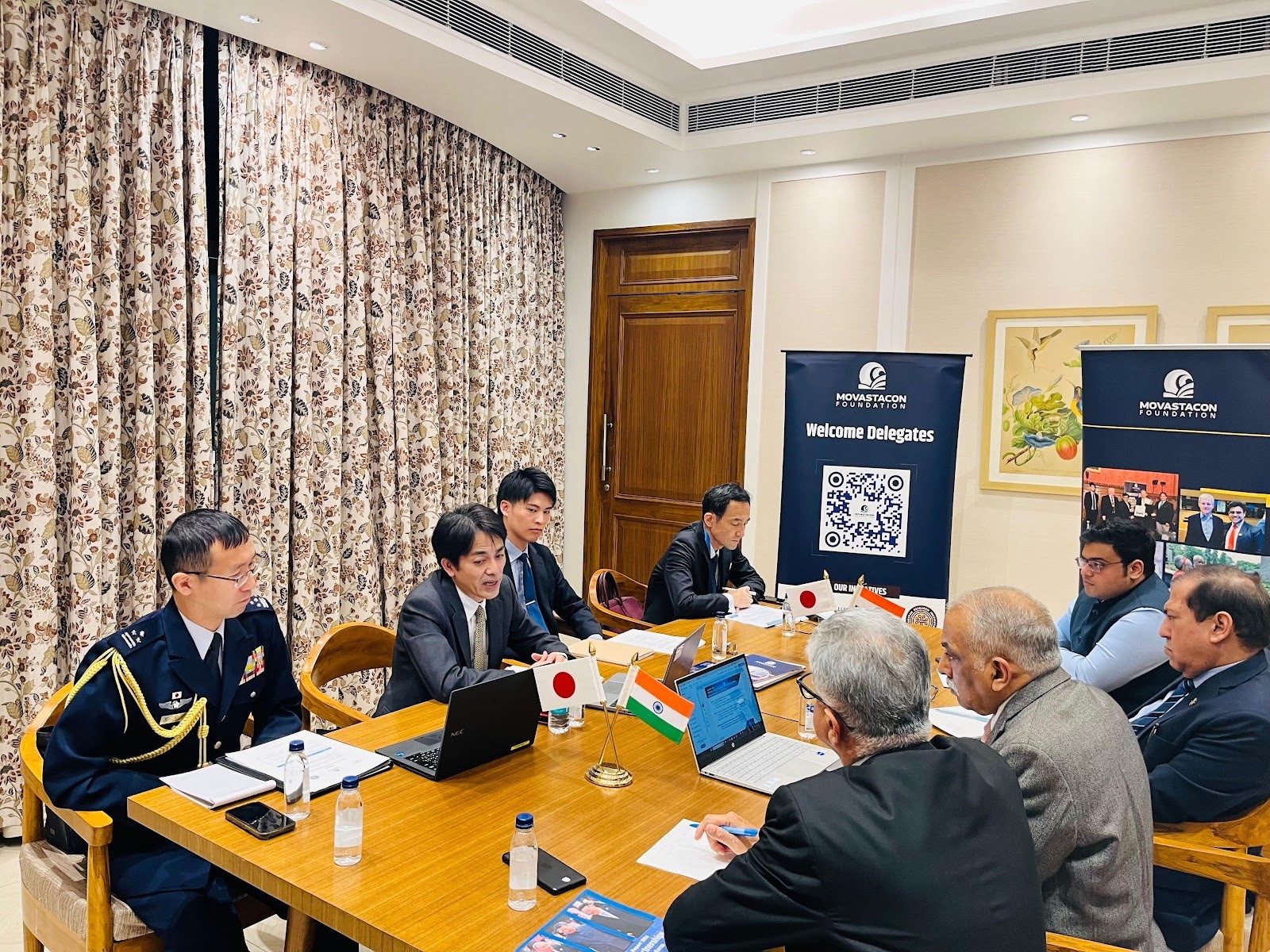
The dialogue featured a series of substantive interventions by senior Indian defence experts. Lt Gen Vinod G. Khandare (Retd), delivered one of the foundational addresses of the session. Drawing on his extensive experience in intelligence, defence diplomacy, and strategic operations, he spoke on the evolving nature of defence challenges in the Indo-Pacific, including the rise of hybrid threats and the growing importance of intelligence sharing and institutional coordination among trusted partners. He highlighted the role of strategic research institutions in strengthening long-term policy alignment between India and Japan.
Lt Gen Rakesh Sharma (Retd.), provided an in-depth assessment of the contemporary security environment, focusing on great-power rivalry and its implications for India’s strategic calculus. His remarks explored the shifting geopolitical alignments involving the United States, China, Russia, and India, and underscored the importance of sustained bilateral platforms such as this dialogue for enhancing mutual understanding of strategic priorities and constraints.
Contributions from NIDS Japan and the Embassy of Japan
As the session progressed, contributions from NIDS Japan scholars and representatives of the Embassy of Japan in India guided the discussion into its core analytical segment. Prof. Masayuki Masuda, Head of the China Division at NIDS, and Mr. Shinya Oguma, Research Fellow at NIDS, presented research-based perspectives on regional security trends, maritime stability, economic security, and the expanding scope of India–Japan strategic cooperation.
Their interventions reflected a balanced combination of academic research and policy relevance, helping build a shared understanding of how both countries assess developments in the Indo- The dialogue highlighted several important takeaways. Participants broadly agreed that India–Japan strategic cooperation is becoming increasingly central to regional stability in the Indo-Pacific. Maritime security emerged as a core area of convergence, while defence-industrial collaboration was recognised as a mutually beneficial pathway for technology development and manufacturing. The importance of institutional dialogue, research cooperation, and regular joint exercises was repeatedly emphasised as essential for strengthening deterrence while preserving strategic autonomy.
Conclusion
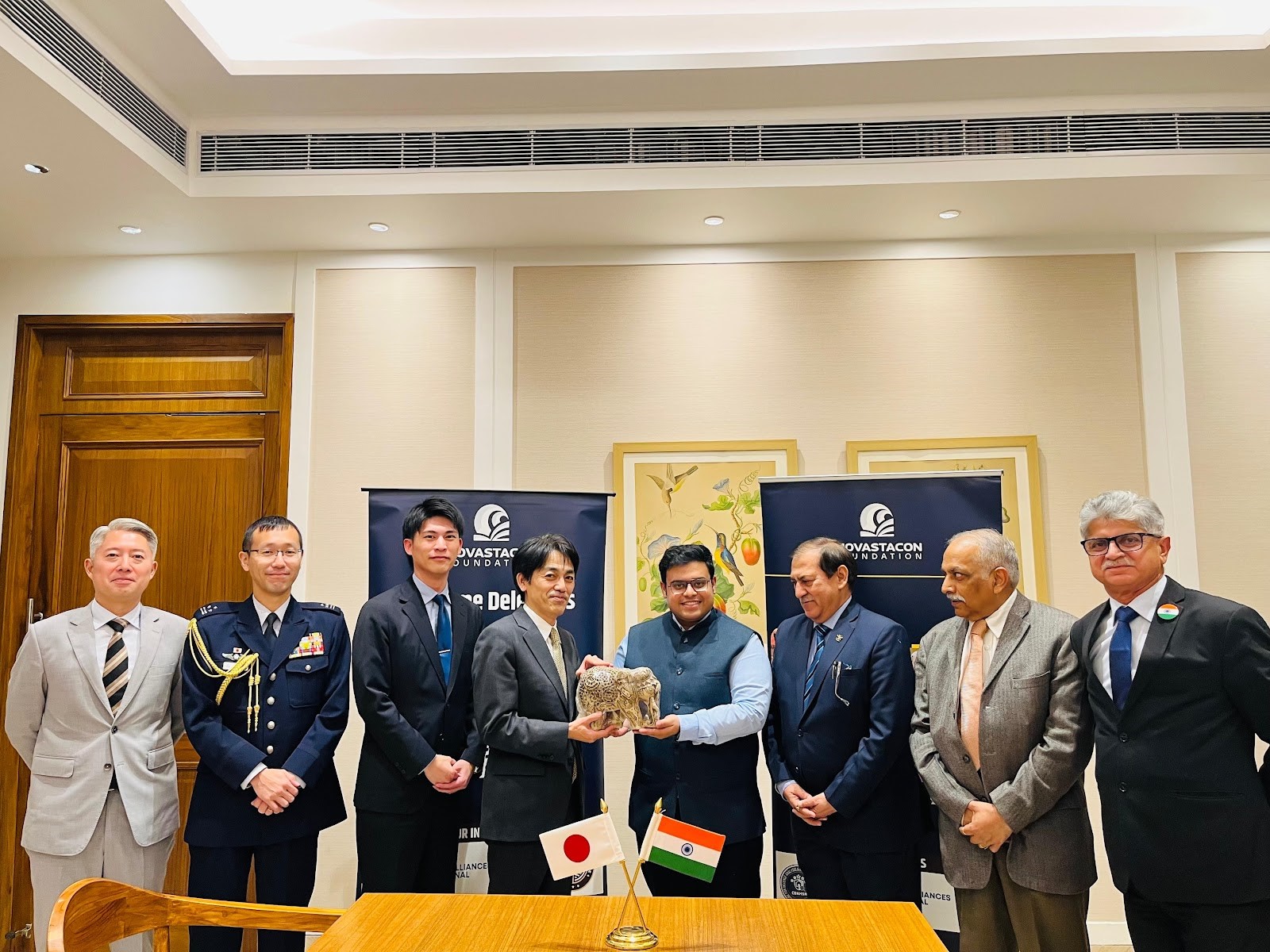
The session concluded with closing remarks by Mr. Mohit Srivastava, who reiterated the Foundation’s commitment to fostering credible, research-driven platforms that bring together diplomatic, academic, and industry perspectives. He thanked the dignitaries, speakers, Embassy officials, NIDS Japan delegates, participants, and organisational partners for their valuable contributions.
The India–Japan Strategic Exchange Session stands as a meaningful addition to the archive of strategic dialogues facilitated by the Movastacon Foundation. It reflects a constructive step forward in strengthening institutional cooperation between India and Japan and contributes to the broader strategic discourse shaping the Indo-Pacific region.