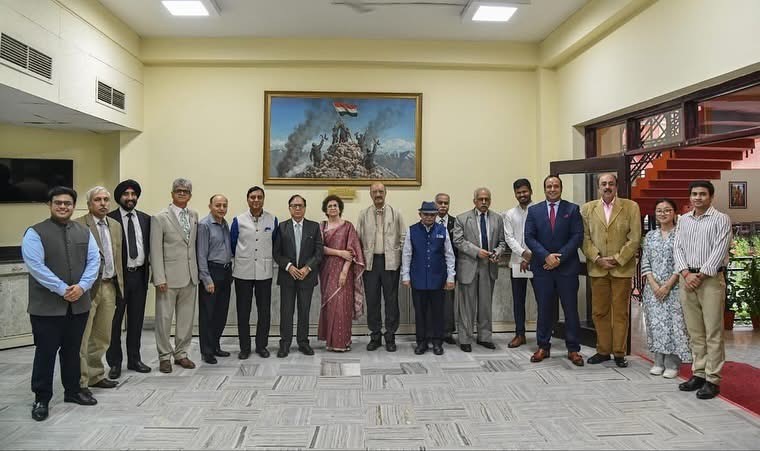
The Centre for Defence Analysis and Homeland Security Research (CDAHSR), a unit of the Movastacon Foundation, in collaboration with the United Service Institution of India (USI), organised a high-level strategic dialogue titled “Navigating a Turbulent and Contested World Order: Strategic Options for India” on 30 September 2025 at Seminar Hall 2, USI Premises, New Delhi.
Navigating a Complex and Contested World: Strategic Options for India
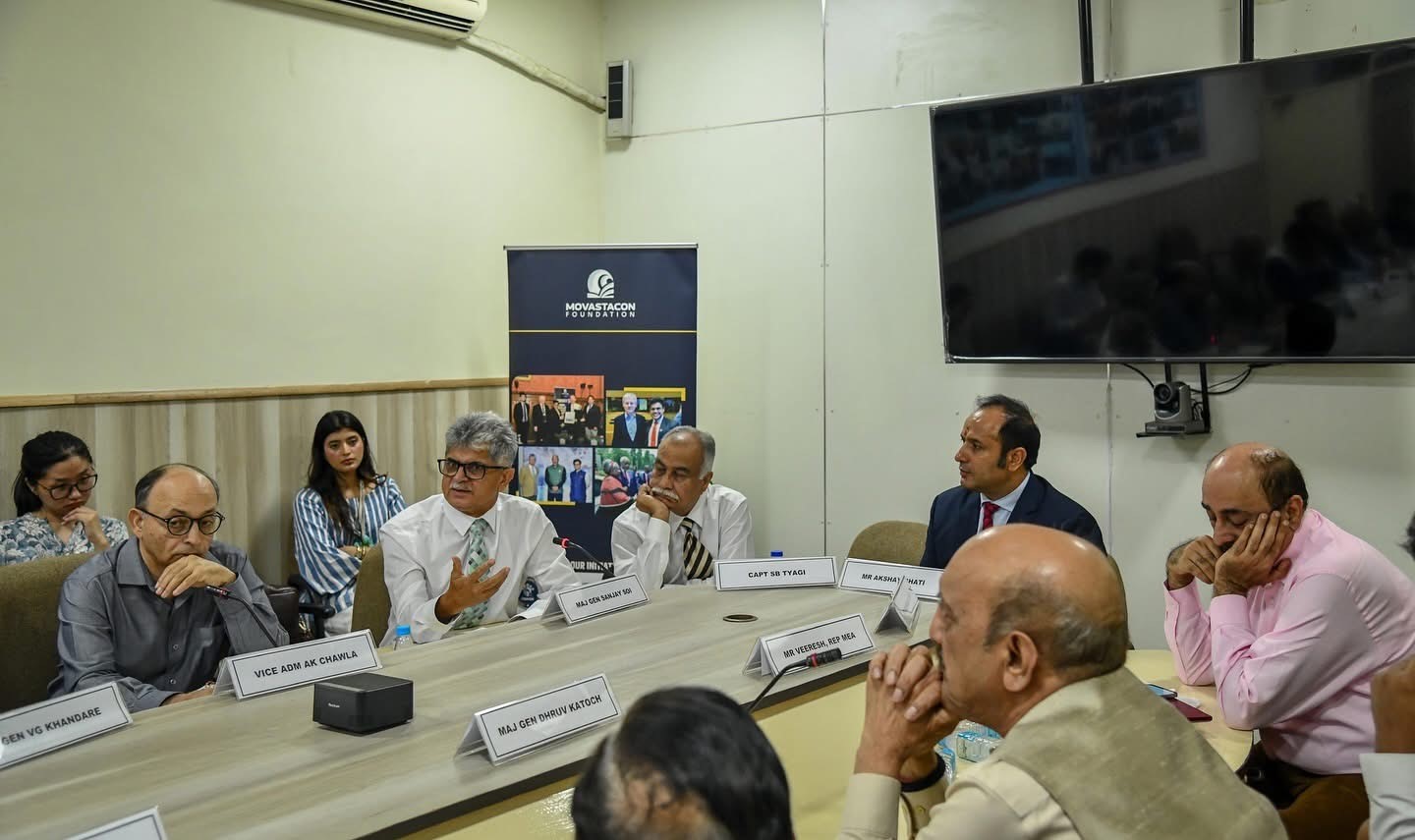
The programme was structured in two segments. The first was an introductory session involving foreign diplomats and invited guests from 10:00 AM to 11:20 AM, followed by an internal roundtable discussion from 11:45 AM to 1:00 PM. The event brought together senior diplomats, retired military leadership, strategic scholars, and policy experts to deliberate on India’s strategic choices amid shifting global power structures, geopolitical uncertainty, and intensifying great-power competition.
Opening Remarks and Institutional Context
The session opened with remarks by Mr. Mohit Srivastava, Founder President of the Movastacon Foundation. He introduced the work of the Foundation and CDAHSR, highlighting the relevance of the discussion in an era marked by global instability, contested alliances, and evolving power equations. He underlined the importance of sustained dialogue among scholars, practitioners, and diplomats to better understand India’s strategic options in a rapidly changing international system.
Following this, Maj. Gen. Rajendra Singh Yadav, Director of the Centre for Strategic Studies and Simulation at USI, delivered remarks on behalf of the host institution. He spoke about the growing influence of Russia and China and the emerging relevance of the RIC framework as a counterweight to Western influence. Referring to the conflict in Ukraine, he highlighted the increasing importance of West Asia as a centre for infrastructure development, capital flows, and global business. He also linked the discussion to India’s long-term national vision, noting how the roadmap to Viksit Bharat could position India as a global power in the coming decades.
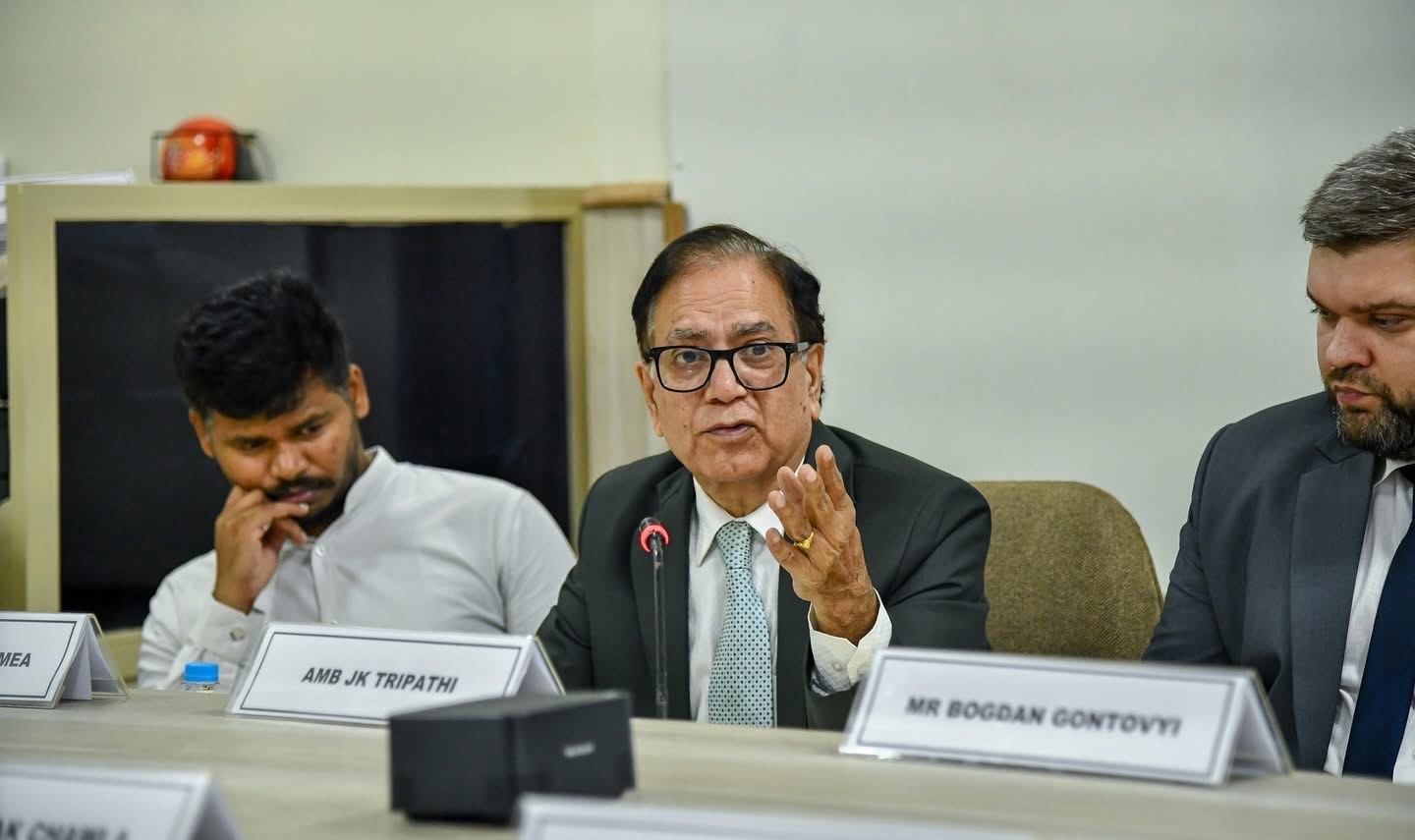
Special Address by Ambassador J. K. Tripathi
Ambassador J. K. Tripathi, former Indian Foreign Service officer, delivered the first special address, focusing on U.S.–China trade relations and noting that despite political tensions, sanctions, and tariffs, bilateral trade has remained resilient due to U.S. dependence on Chinese manufacturing, particularly in electric vehicle components and rare earths. He observed that while India faces challenges in its relationship with China, there are areas for cooperation such as climate change and technology, highlighting China’s climate-resilient policies as potential lessons for India. Emphasising the fluid nature of diplomacy, he cited the Maldives as an example of how electoral change can reshape foreign policy and projected long-term internal weakening in Pakistan due to systemic failures.
Special Address by Lt. Gen. Rakesh Sharma
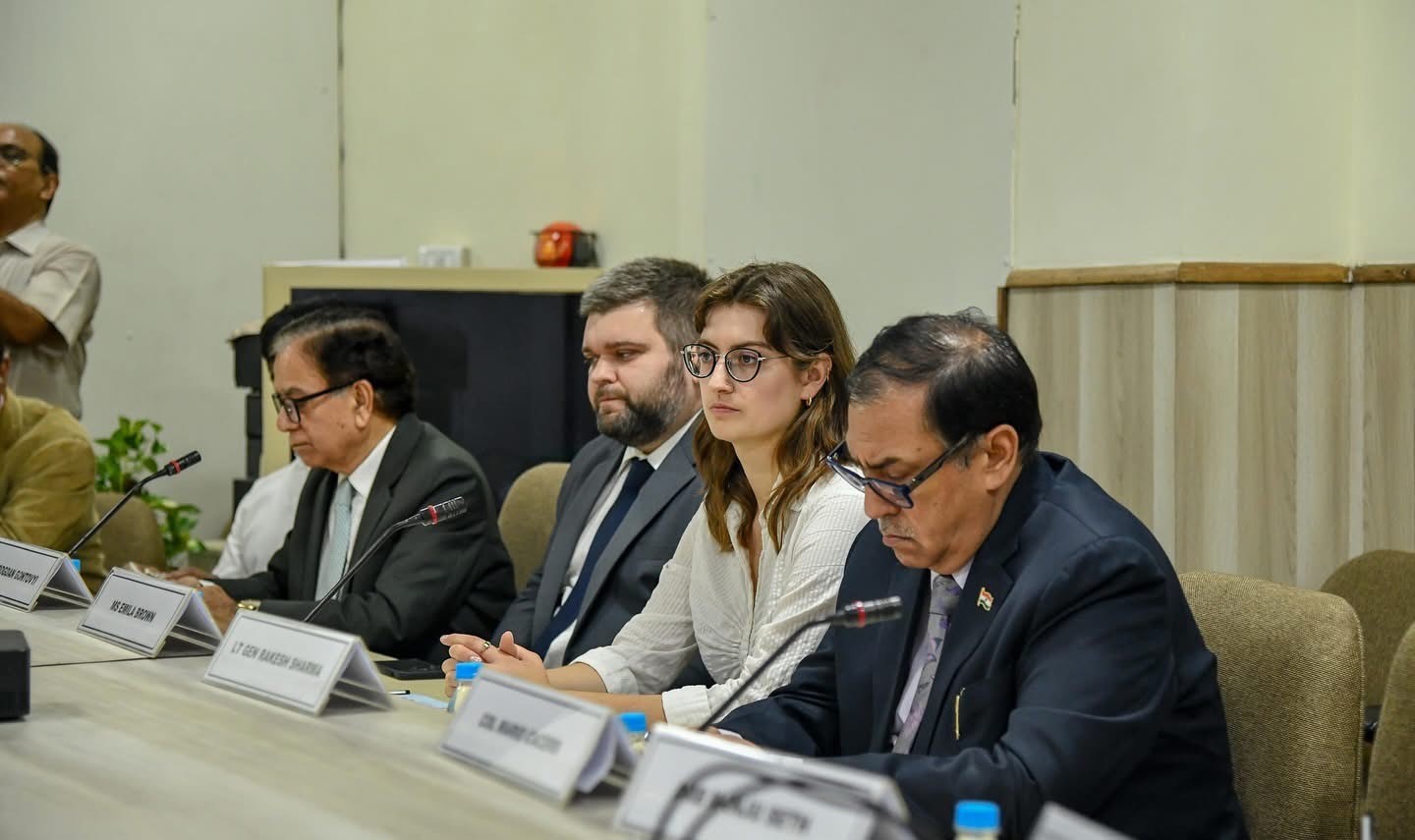
The second special address was delivered by Lt. Gen. Rakesh Sharma, Fellow at the Vivekananda International Foundation and Centre for Land Warfare Studies, and General Bipin Rawat Chair at USI. He highlighted the unpredictability of contemporary global politics, citing abrupt tariff changes as evidence of economic volatility, and argued that despite claims of multipolarity, the world remains largely bipolar, dominated by the U.S. and China. He noted China’s aggressive border posture as a strain on India’s strategic focus and observed the weakening of global conflict-resolution mechanisms. Emphasising economic coercion through tariffs and sanctions, he concluded that India can effectively counter China by building credible strategic deterrence, even without technological parity.
Closing Remarks
The formal segment concluded with remarks by Maj. Gen. Sanjay Soi, Executive Director of CDAHSR, Movastacon Foundation. He discussed China’s growing assertiveness and expansionist behaviour, emphasising the need for India to preserve strategic autonomy while navigating great-power rivalries. He referred to China’s doctrine of “winning without fighting” and stressed the importance of policy preparedness, flexibility, and hedging strategies to safeguard India’s national interests in an uncertain global order.
Panel Discussion and Expert Interventions
The panel discussion featured a wide range of perspectives from senior military leaders, diplomats, academics, and policy experts.
● Lt. Gen. V. G. Khandare, former Principal Adviser to the Ministry of Defence, highlighted the importance of internal stability, calling for reforms in the military, judiciary, and police. He cited civil unrest, including the situation in Manipur, as evidence of internal vulnerabilities. He stressed the importance of Atmanirbhar Bharat alongside global engagement and drew attention to China’s weather modification initiatives, suggesting that India’s forest and cloud management should be centrally coordinated. He also pointed to gaps in India’s disaster mitigation technologies.
● Mr. Robinder Sachdeva, President and Vice-Chairman of the Imagindia Institute, advocated peace and non-violence as long-term solutions to global conflict. He rejected the idea of permanent enemies and argued that compassion is often misinterpreted as weakness in contemporary geopolitical discourse. He also referred to the pace of decision-making during the Trump administration, highlighting the rapid issuance of executive orders.
● Ambassador Manju Seth, former Ambassador of India, stressed the importance of engaging younger generations in diplomacy and policymaking. She observed that while the United States promotes multilateralism, it continues to dominate global systems. She cautioned that India’s pursuit of strategic autonomy and multipolarity may encounter challenges and warned against over-reliance on groupings such as the Quad.
● Air Marshal Rajesh Kumar, retired from the Indian Air Force, spoke about trust in indigenous technology and highlighted India’s dependence on foreign suppliers for critical defence systems. He suggested the creation of an Indian Comprehensive National Power index and criticised delays caused by procurement decision paralysis.
● Air Commodore A. S. Bahal focused on jet engine development, describing it as one of the most complex areas of defence manufacturing. He criticised slow institutional processes and urged timely decision-making in defence acquisitions.
● Maj. Gen. Dr. S. V. Asthana warned against excessive reliance on self-developed systems due to design and delivery delays. He called for immediate procurement to address capability gaps and stressed the importance of narrative-building and information warfare, advocating the formulation of a dedicated Information Warfare Doctrine.
● Vice Admiral Anil Kumar Chawla emphasised maritime power as central to India’s global standing and assessed the strengths and limitations of the Indian Navy in achieving maritime dominance.
● Prof. Anshu Joshi of Jawaharlal Nehru University drew insights from her book Geopolitics 2024, focusing on U.S. global influence, India–China relations, and West Asia. She noted India’s economic resilience despite Western tariffs and criticised U.S. trade policies affecting Indian exports.
● Maj. Gen. Dhruv Katoch highlighted inefficiencies in the public sector and advocated greater private sector participation in defence production. He stressed the need to support wealth creators and warned against losing returning Indian talent due to lack of opportunities.
● Prof. (Capt.) S. B. Tyagi pointed to the absence of a clearly defined homeland security policy in India and urged transparency in security doctrines. He raised concerns about internal instability and called for preparedness to prevent civil unrest.
Conclusion
The dialogue concluded with a shared recognition of the complexity of the current global order and the need for India to adopt flexible, resilient, and strategically autonomous approaches. The discussions reinforced the importance of internal stability, credible deterrence, institutional reform, and informed policymaking in navigating an increasingly contested international environment.