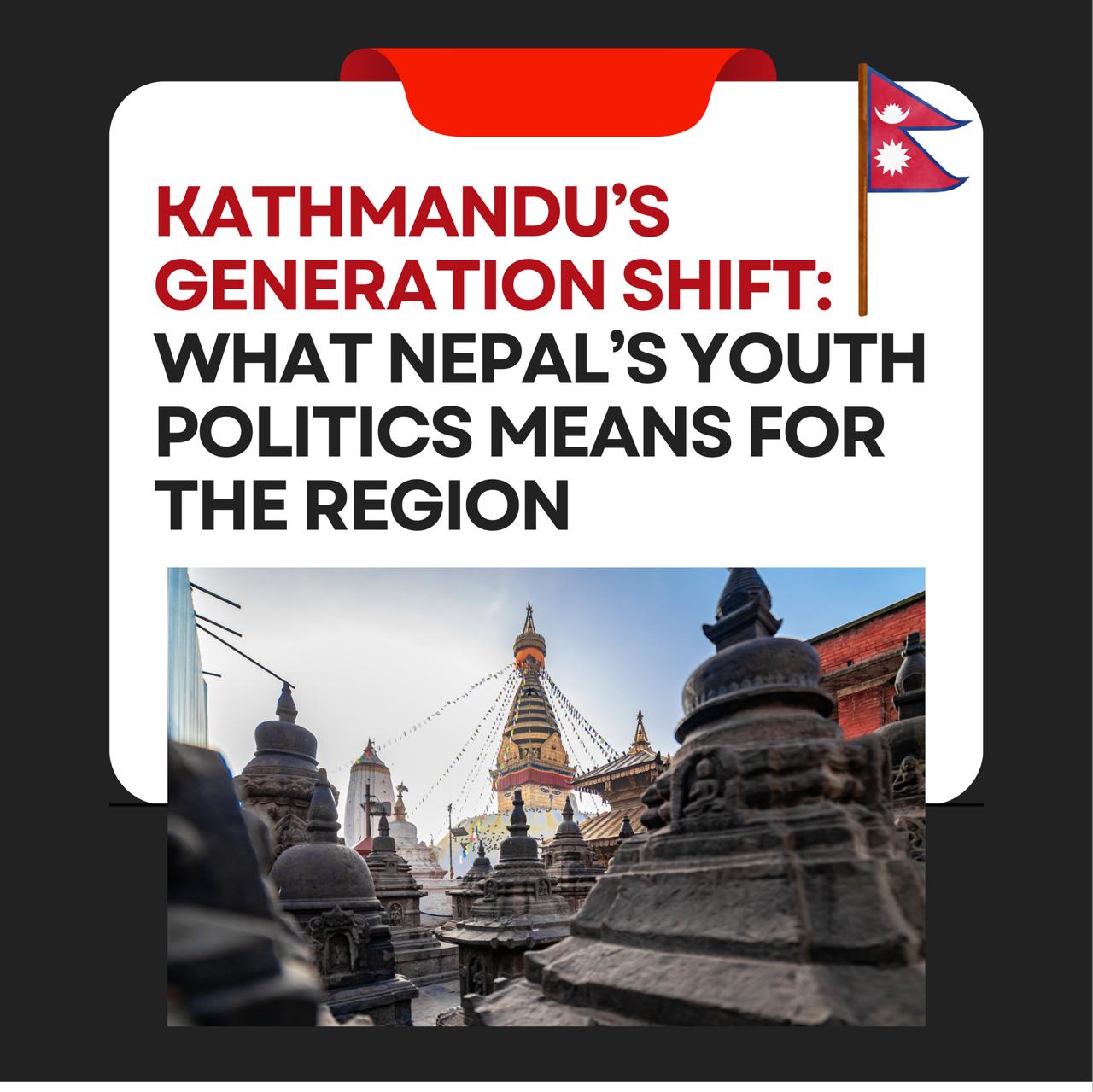
Kathmandu’s Generation Shift: What Nepal’s Youth Politics Means for the Region

It has been a turbulent stretch for South Asia. Not dramatic in one single moment, but in the way events have kept unfolding, one after another. The American withdrawal from Afghanistan, the economic troubles in Sri Lanka, the military takeover in Myanmar following the detention of Aung San Suu Kyi, and phases of unrest in Bangladesh have taken together, leaving behind a sense of a region still trying to steady itself. Somewhere within this larger picture sits Nepal. It may not look as intense at first glance, but the signals coming out of it are worth paying attention to.

In Kathmandu, the recent protests have raised questions that go beyond the events themselves. Nepal is no stranger to public demonstrations, so the fact that people gathered is not unusual. What feels different, though, is the pace at which things moved and the kind of people who were at the centre of it. The crowd was younger. The reactions were quicker. There was less waiting around to see how things might unfold.

There has also been a fair bit of exaggeration around what happened, and that tends to blur the real picture. Protests did take place, especially after certain government decisions that were seen as restrictive in the digital space. Large scale institutional damage or targeted violence against political figures has been accounted for. The situation was tense at points, yes, but not something that suggested the system itself was collapsing. If anything, it revealed a slower, more underlying shift.

At the surface, the trigger seemed clear enough. Any attempt to limit expression, particularly online, is likely to draw a response now. For many young people, the digital space is not separate from their public life. It is where they speak, organise, argue, and sometimes even find their political voice. So when that space feels restricted, it doesn’t go unnoticed.
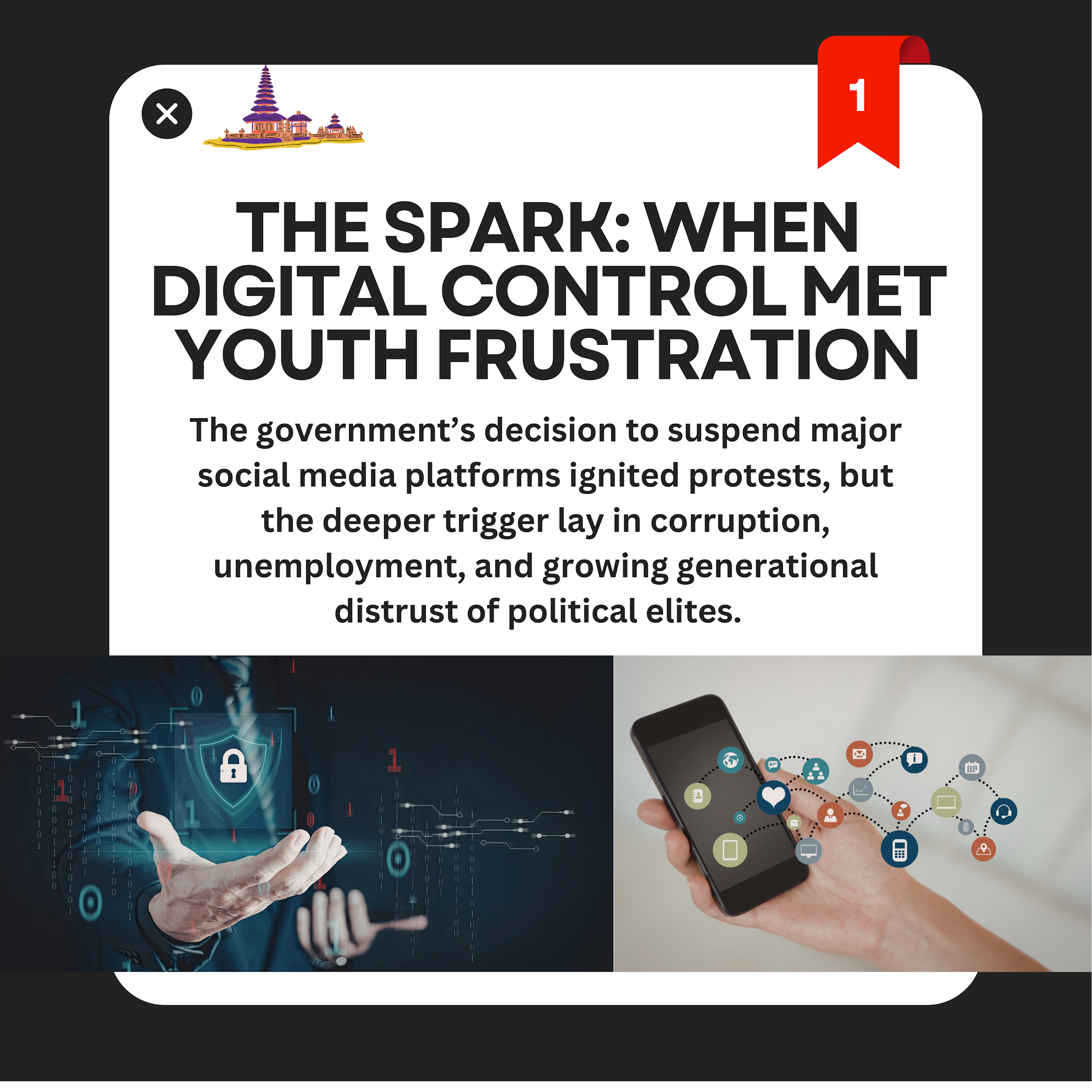
But stopping at that explanation would miss the larger point. The frustration did not begin there. It has been around for a while, just not always this visible. Nepal’s political system continues to function as a democracy, but its day to day working has not always inspired confidence. Governments change often. Concerns around governance and accountability have lingered. Over time, that has created a quiet distance between institutions and the people they are meant to represent.

For younger citizens, that distance feels real. It shows up in practical ways—in trying to find stable work, in limited opportunities, in the sense that decisions are taken somewhere far removed from their own experience. These are not abstract political concerns. They are part of everyday life. So when protests happened, they were not really about one single issue. That moment just gave shape to something that was already there.

What is also worth noticing is how the mobilisation happened. This is a generation that does not wait for instructions in the same way. Information reaches them quickly, and they react just as quickly. There is no fixed centre, no clear starting point. Things spread, people relate, and before long, it becomes something larger.

There is a certain openness in that, which can be a strength. At the same time, it can make movements harder to hold together. Without structure, direction can shift, sometimes without warning. Nepal’s recent protests showed both sides of this. There was clarity in what people felt, but not always in how that feeling would be carried forward.

All of this is happening within a system that is still settling. Nepal’s transition from monarchy to republic was a significant shift, and building stable institutions takes time. More time than people usually expect. The framework is there, but the trust that supports it is still developing.

In that kind of environment, even limited unrest can feel bigger than it is. Reactions sharpen. Responses from those in authority can seem cautious, sometimes even distant. And that, in turn, feeds the very gap that people are reacting to.

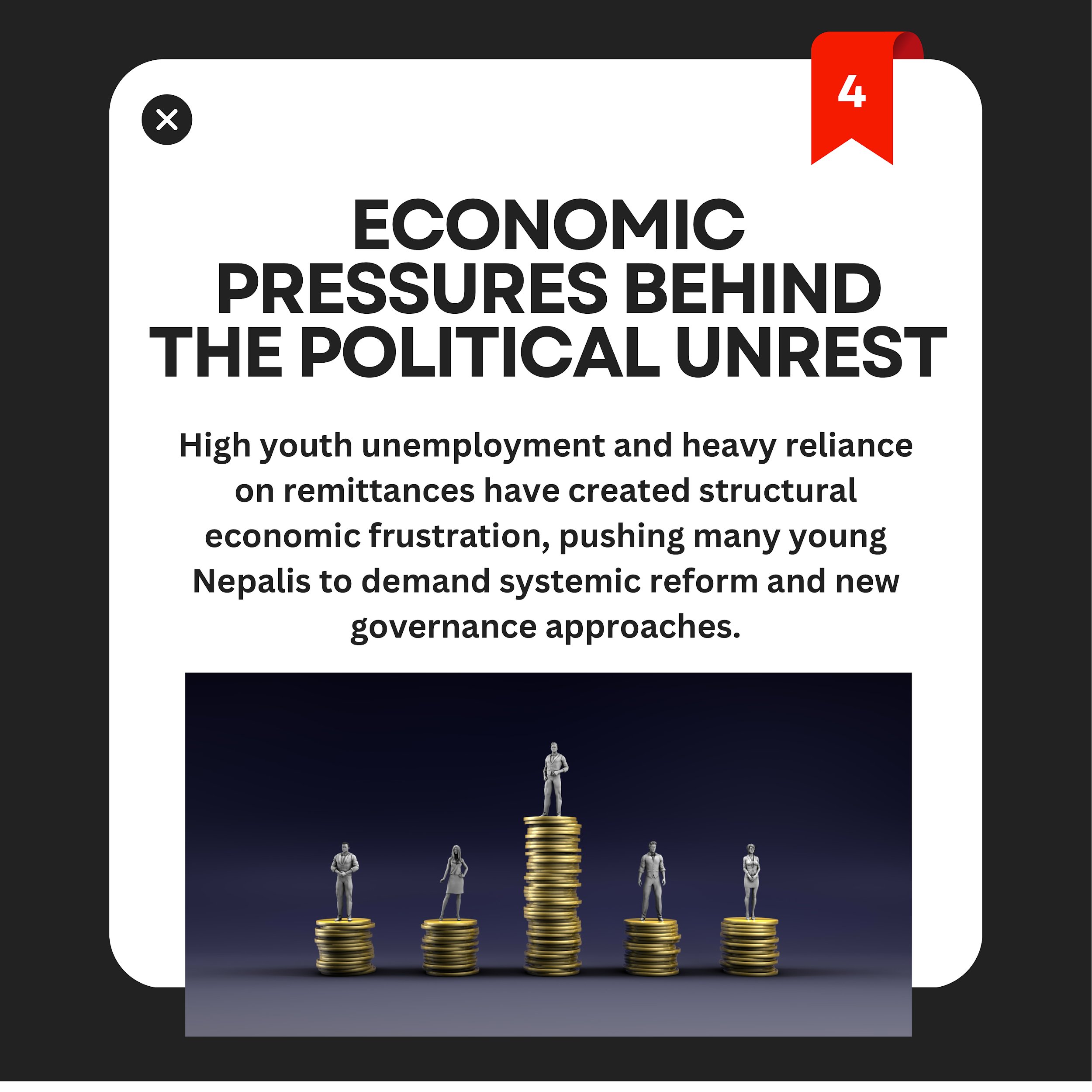
The economic side adds another layer to this. Nepal’s reliance on remittances has supported many households, but it has also meant that opportunities within the country remain limited. For young people entering the workforce, this creates a difficult situation. They are more aware of what is possible elsewhere, yet often find fewer options at home.

That gap between expectation and reality is not always loud, but it is steady. Over time, it shapes how people see their future. And when the future feels uncertain, it inevitably reflects back on how they see the system around them.

Where things go from here is still open. Moments like this do not come with a fixed outcome. They can lead to change, if they are taken seriously. A response that listens, that adapts, that makes space for participation could turn this into something constructive.


But there is also the possibility that things quiet down without much actually shifting. If that happens, the frustration does not really disappear. It just becomes less visible for a while. And when it returns, it often does so with more intensity.

A lot will depend on what happens next, and on both sides. Leadership matters, of course, but so does the way people choose to stay engaged. Change rarely happens all at once, and that can be frustrating in itself.

What is unfolding in Kathmandu does not feel like an isolated episode. It feels more like a sign that something is changing in how politics is experienced. A younger generation is stepping in, not entirely convinced by the old ways, and not willing to stay on the sidelines either.

For Nepal, that could be an opportunity, if it is recognised as such. A more engaged population can strengthen democratic life, but only if there is room for that engagement to grow into something meaningful.

In the end, the situation comes down to something fairly simple. When people feel unheard, they find ways to be heard. The real question is what happens after that.